When to Go Whale Watching on Vancouver Island
Vancouver Island is well known for its whale watching, and it’s one of our favorite places to visit each summer for that reason among many others. The island sits along the Pacific Ocean and the Salish Sea, where ocean currents create an ecosystem that supports a wide variety of marine life. Each year, several whale species travel through these waters to feed, migrate, and raise their young.
Whether you’re watching from a boat, kayak, or the shore, Vancouver Island whale watching offers unforgettable wildlife encounters during specific times of year. Timing your visit can make a big difference if you have a specific species you’re hoping to see, so it helps to understand the seasonal patterns of the whales that frequent this region before solidifying your travel plans.
Below is a guide to the best times for whale watching on Vancouver Island and the species you just might encounter along the way.
An Overview of the Whale Watching Season on Vancouver Island
The whale watching season on Vancouver Island generally runs from March through October, with different species appearing throughout the year.
Spring marks the start of the season as gray whales leave Baja California and migrate north along the coast. As summer arrives, humpback whales and orcas become more common, and the region’s calm waters and long daylight hours make wildlife viewing spectacular during this time of year. In the fall, humpbacks often remain in the area to feed before beginning their migration south.
While whales can sometimes be seen outside of these months, the late spring through early fall window offers the most consistent sightings and the best conditions for exploring this wild coastline.
Gray Whales
Best months to see them: March to May
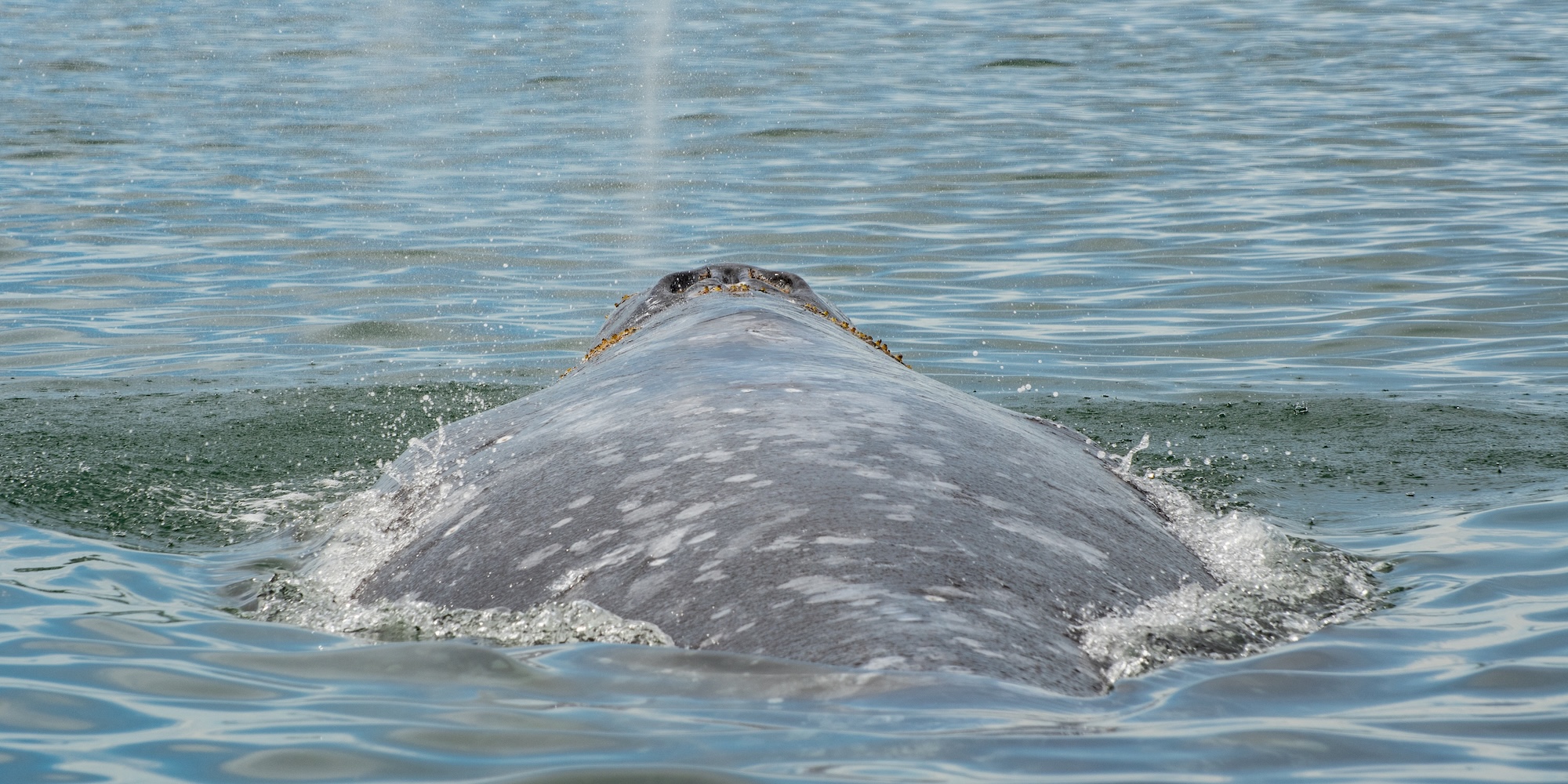
Gray whales are some of the first whales to appear off of Vancouver Island during whale watching season. Each spring, these whales travel thousands of miles from their winter grounds in Baja California to feeding areas in Alaska.
During their migration north, gray whales pass close to Vancouver Island’s west coast, sometimes traveling surprisingly close to shore. It’s also possible to see small groups of Gray whales here outside of the peak season, but far less likely as the majority are leaving Vancouver Island and heading to their summer feeding grounds. These whales are known for their gray coloring and slow, steady movements as they surface to breathe.
Because they often migrate in smaller groups and spend time feeding in shallow coastal areas, gray whales can sometimes be spotted from land or during a kayaking trip. Seeing these whales make their long migration journey is one of the highlights of spring wildlife viewing on Vancouver Island.
Orcas
Best months to see them: May to September
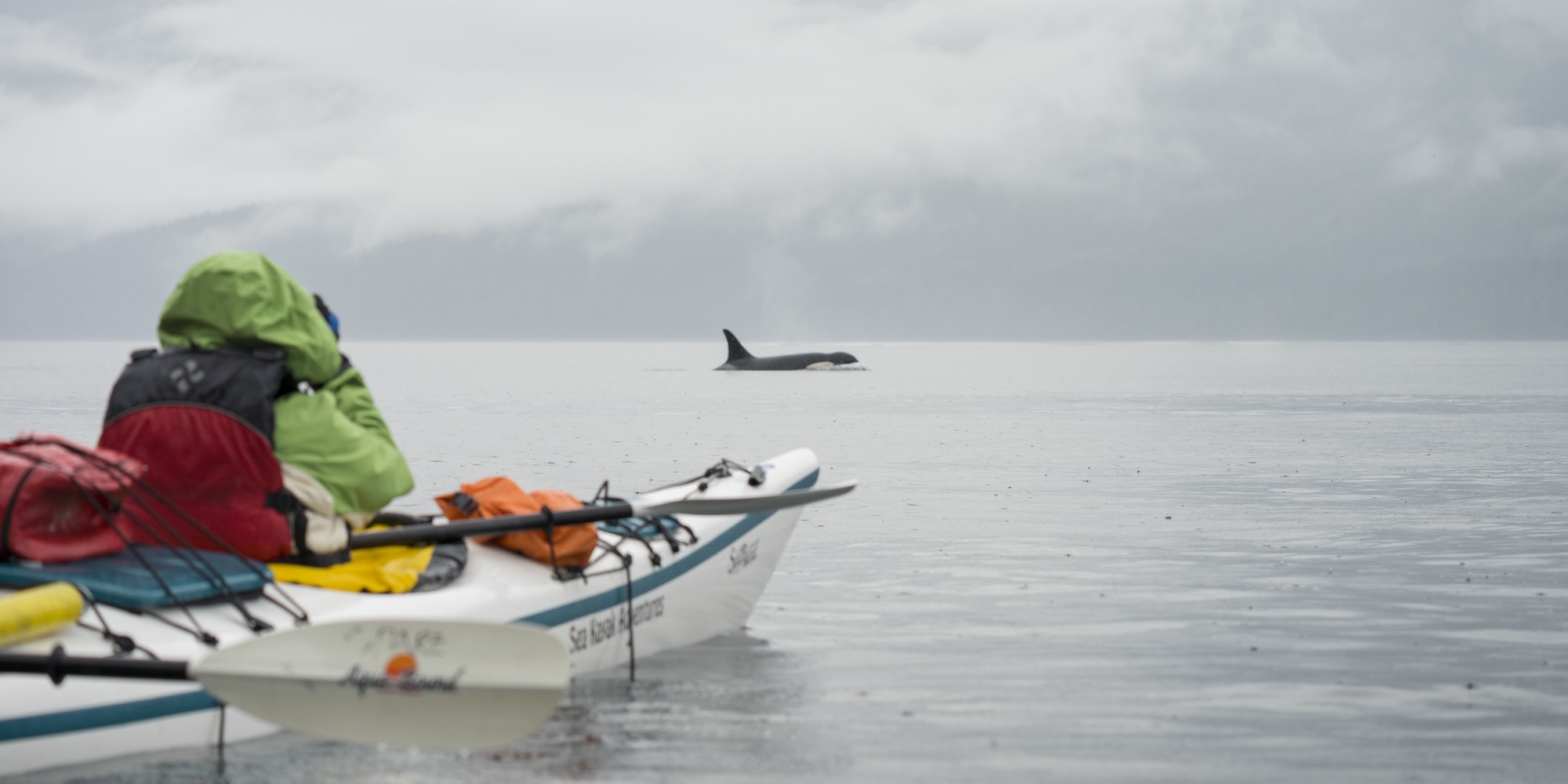
Orcas, also known as killer whales, are among the most iconic species seen during Vancouver Island whale watching season. These highly intelligent marine mammals are known for their striking black-and-white coloration and strong family bonds. Getting the opportunity to see them in the wild is truly unforgettable.
Two main types of orcas are commonly found in the waters around Vancouver Island: resident and transient (also known as Bigg’s) orcas. Resident orcas primarily feed on salmon and live in tight-knit, stable family groups called pods, while transient orcas hunt marine mammals such as seals and sea lions and tend to travel in smaller, less predictable groups. Despite what their names might suggest, the key difference between these two types isn’t whether they stay in one place or move around. What distinguishes them is their diet, general behavior, social structure, and even communication.
The northern part of Vancouver Island, particularly areas like Johnstone Strait, is famous for its orca populations. These waters provide ideal feeding conditions and are one of the most reliable places in the world to observe orcas in their natural habitat.
Explore our Orca Basecamp Tour
Humpback Whales
Best months to see them: June to October
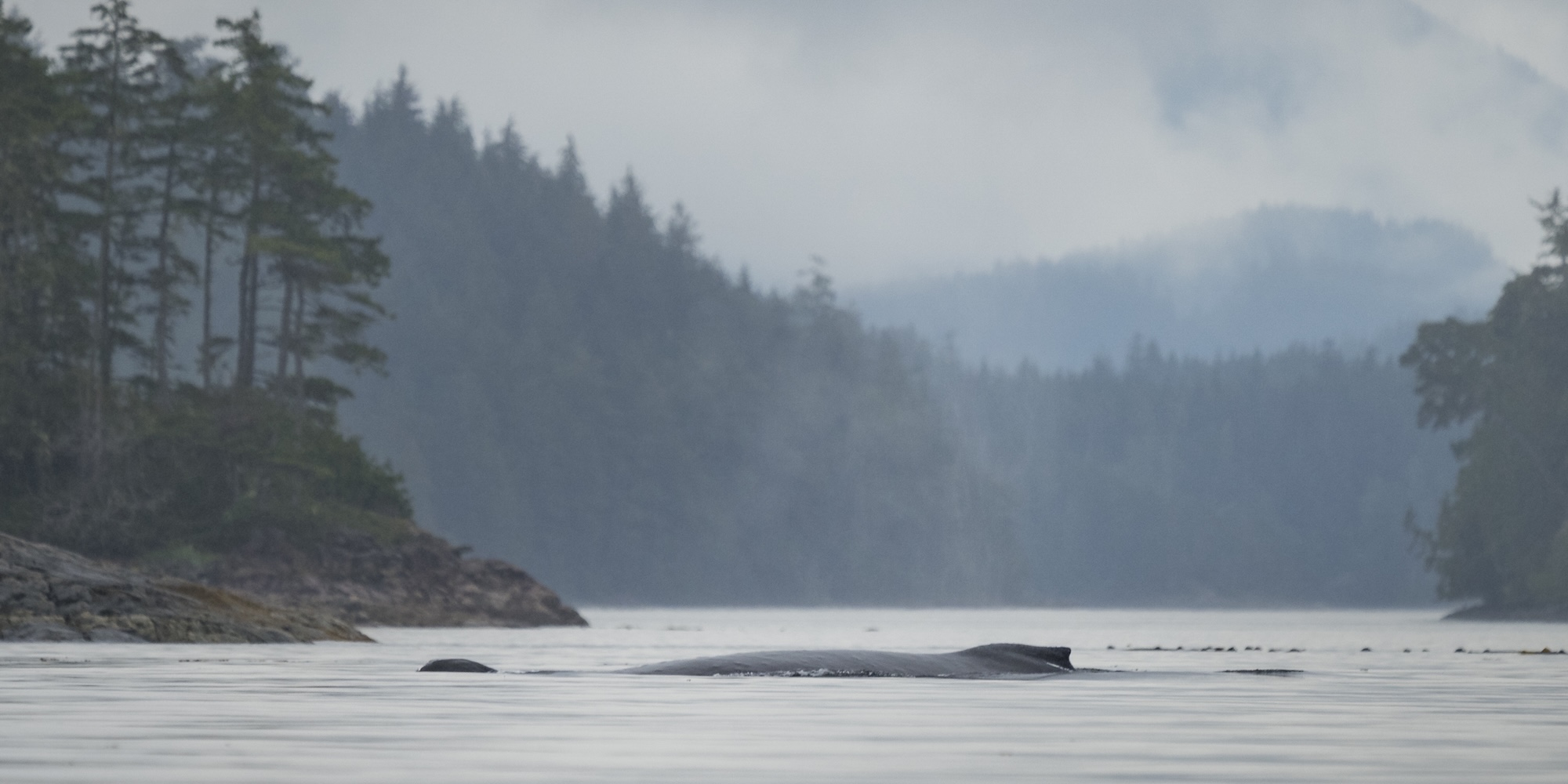
Humpback whales are another exciting whale to encounter around Vancouver Island. These massive baleen whales migrate from warm tropical breeding grounds to the rich feeding waters of the Pacific Northwest each summer.
Humpbacks are known for their dramatic behavior, making them a really incredible species to spot. They often breach completely out of the water, slap their long pectoral fins on the surface, or lift their massive tails before diving. Their enormous fins (which can grow up to 16 feet long!) are among the longest of any whale species.
In recent years, humpback populations along the British Columbia coast have been steadily increasing as conservation efforts have helped them recover from historic whaling. Seeing one of these whales surface nearby from your kayak, or watching them feed in the open water, is a really special wildlife encounter.
Learn about our Humpback Basecamp Tour
Sea Kayaking and Whale Watching on Vancouver Island
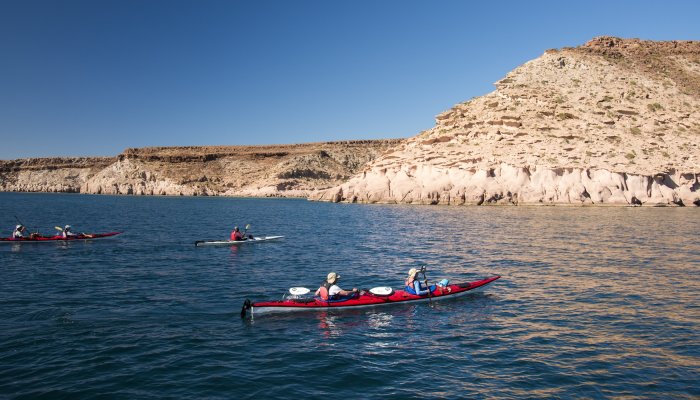
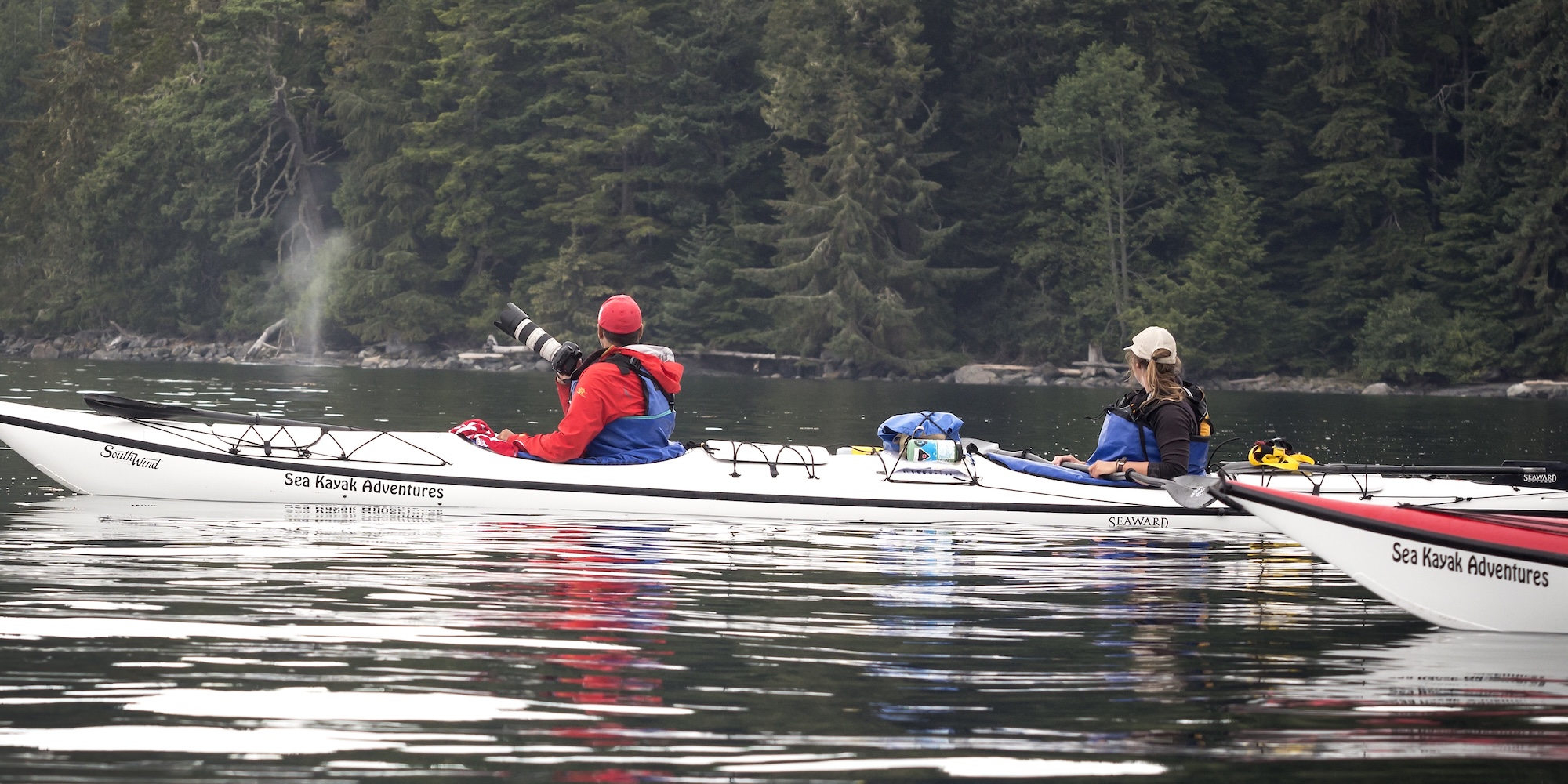
While many visitors experience Vancouver Island whale watching from larger boats, sea kayaking offers a completely different perspective. Paddling quietly along this coastline allows you to explore the same waters whales inhabit without the noise of engines. The slower pace of kayaking also allows you to experience some of the details of the marine environment you might not notice from the boat. Whether you spot the seabirds, harbor seals, dolphins, or nudibranchs below your kayak–these wildlife sightings can be just as memorable as the whales.
Our guided kayaking trips follow strict wildlife viewing regulations to ensure encounters remain safe and respectful. Rather than approaching whales, we observe from a distance and allow wildlife to move naturally through the area, making it even more special when the wildlife chooses to approach us. We’ve watched for decades as many of our guests leave understanding how kayaking creates a deeper connection to the landscape and wildlife, and that’s something we look forward to sharing year after year.
Where to Go Whale Watching on Vancouver Island
Several regions around Vancouver Island are known for exceptional whale watching opportunities. The Johnstone Strait, located between Vancouver Island and the mainland of British Columbia, is one of the most famous whale watching areas in the world. The strait’s nutrient-rich waters attract large numbers of marine mammals, making it a prime location for spotting orcas and humpback whales.
On the island’s west coast, areas near Tofino and the Pacific Rim also offer whale watching opportunities, particularly during the gray whale migration in spring.
Northern Vancouver Island tends to be less crowded than southern destinations, providing a quieter setting for wildlife viewing and exploration.
Responsible Whale Watching
Experiencing whales in the wild is an incredible privilege that also comes with responsibility. Vancouver Island is home to some endangered populations of orcas, and protecting their habitat is essential for their long-term survival.
When observing whales, it’s important to maintain a safe distance and avoid disrupting their natural behavior. In Canada, strict marine mammal viewing guidelines require vessels and kayaks to remain at least 200 meters away from orcas and other marine mammals. Responsible operators follow these regulations carefully to ensure wildlife encounters remain safe for both whales and visitors, and it’s important to ensure that any tour you're booking will follow these regulations.
If you’re traveling with a guide, choosing companies that prioritize conservation and follow ethical wildlife viewing practices helps support sustainable tourism. It’s also important to remember that even with experienced guides and ideal conditions, whale sightings are never guaranteed. Every encounter with these animals is a special moment and a reminder that we are visitors in their world.
Planning Your Vancouver Island Whale Watching Trip
No matter when you visit, whale watching on Vancouver Island offers the chance to witness some of the ocean’s most remarkable animals in their natural habitat. Whether you’re scanning the horizon from shore, traveling by boat, or paddling quietly through coastal waters, each encounter with these majestic creatures is truly unforgettable.